Conservation grant success
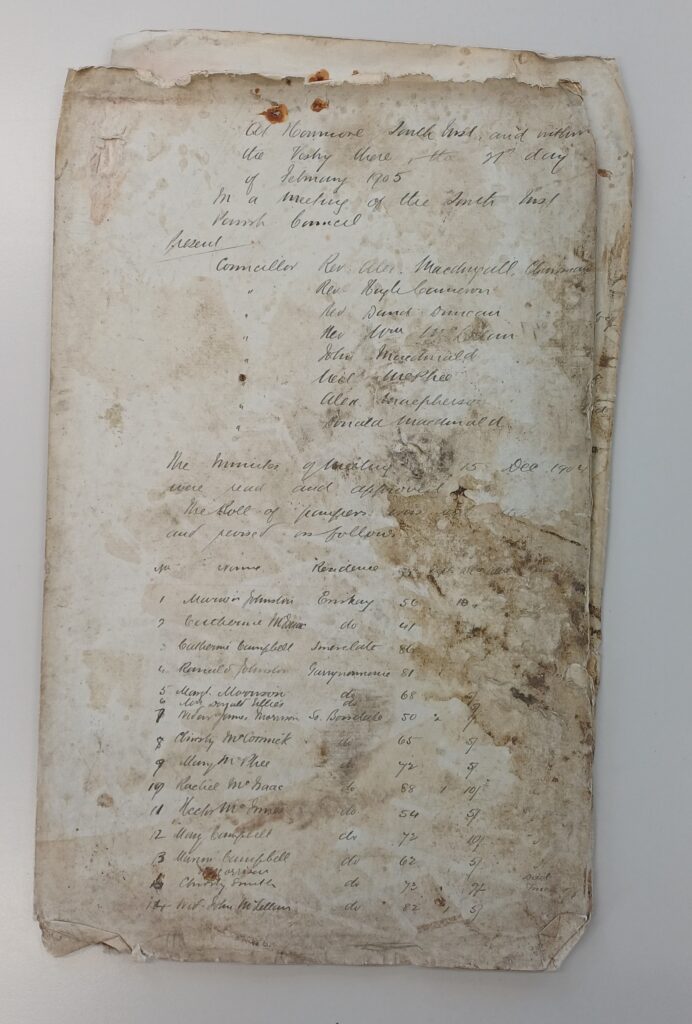
Five archive volumes which together help to document the history of Barra and South Uist are to be conserved, thanks to a grant of more than £8,000 from the National Manuscripts Conservation Trust.
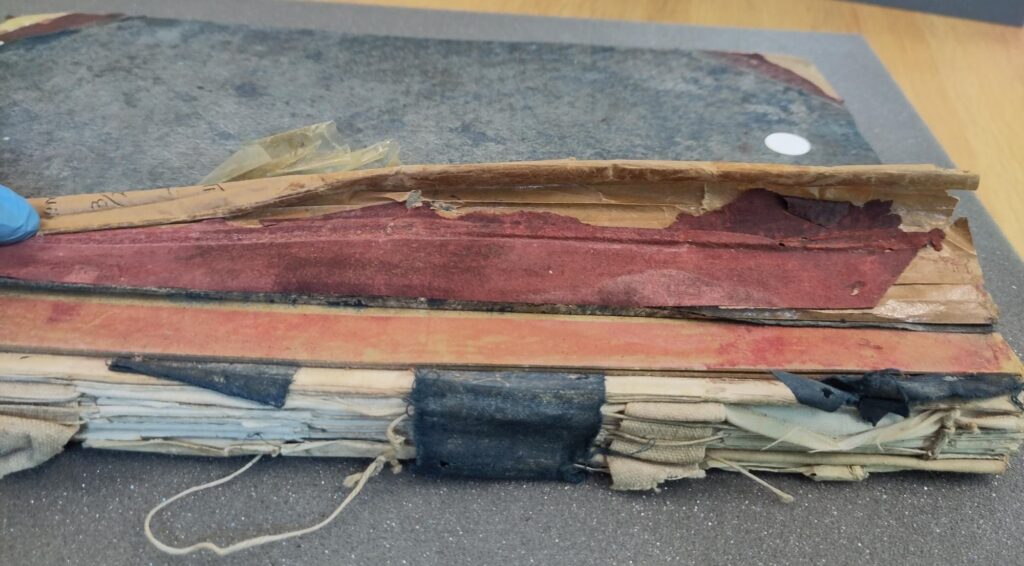
The funding, announced in the summer 2026 round of NMCT grants, was sought by Tasglann nan Eilean to enable extensive and intricate archive conservation work to be carried out on the items, which are in a very fragile condition from having been stored in an inappropriate environment in the past.
The items belong to three separate but interconnected collections:
- Barra Parochial Board/ Parish Council 1866-1943
- South Uist Parochial Board/ Parish Council 1878-1968, and
- South Uist and Barra District Committee 1890-1930.
As the minute books are currently in such poor condition, they can’t be accessed for research and in some cases, due to the presence of mould, they also pose a health risk. This grant will enable treatment by Highland Archive’s conservation service to fully restore the volumes.
Parochial Boards were established under the 1845 Poor Law Act. Each Board appointed an Inspector of the Poor. Inspectors were criminally liable for the death of any pauper if they had been refused relief. If poor relief was refused or considered inadequate the applicant could appeal to the Sheriff or Board of Supervision in Edinburgh.
From 1886, Parochial Boards became responsible for the control of infectious disease, removal of nuisances, food safety, water supply and hospital provision. Parish Councils replaced Parochial Boards in 1894. Their main responsibilities were Poor Law administration, child protection, burial grounds, registration of vaccinations and the mentally ill. South Uist and Barra District Committee was formed in 1890 and was mainly responsible for Public Health (including housing) and the administration of Roads & Bridges Acts.
We are delighted that our application for funding was successful, especially given the stiff competition for these funds. It is intended that the work will be done in the next 18 months, after which the volumes will be accessible for research by archive staff and researchers. The content of these volumes will add to our knowledge as an important source for the social history of the islands in areas such as poor relief, child welfare, public health and housing in days gone by.
We look forward to sharing updates on the progress of this project in the months ahead.